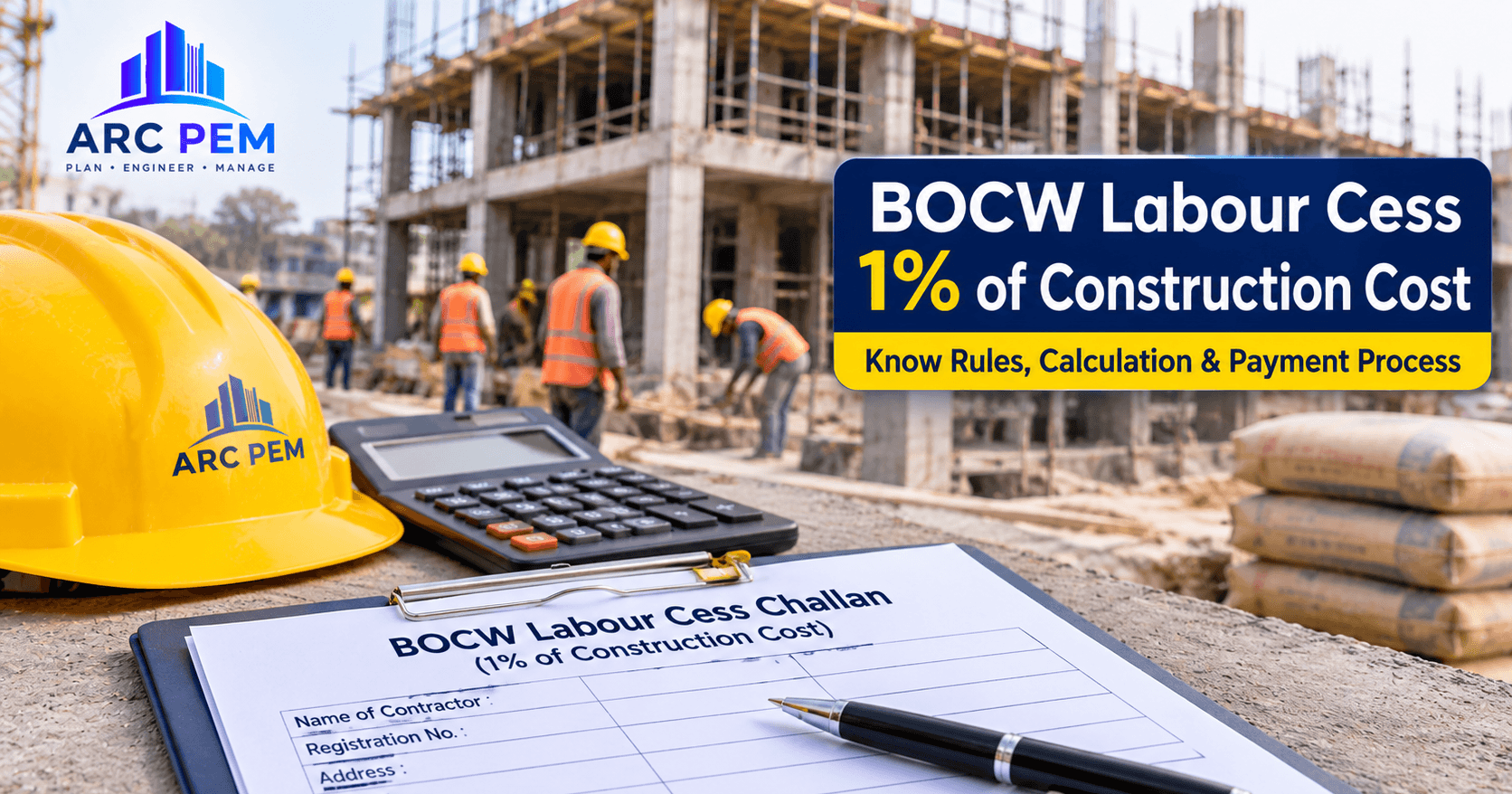
Quick answer: the BOCW labour cess, also called the construction workers' welfare cess, is 1% of the cost of construction incurred by an employer on a building or other construction project. Since the labour codes came into force, it is levied under Section 100(1) of the Code on Social Security, 2020, and the 1% rate was notified on 8 May 2026. The cost of land and certain compensation payments are left out of the base. Reports on the new rules say the cess is paid in advance on a self-assessed construction cost certified by a chartered engineer, and that late payment attracts interest of 1% per month.
This article is based on reports available on 4 November 2026. Labour law is changing fast, and state boards apply the rules in their own ways, so confirm your position with your CA or labour law adviser and check the Ministry of Labour and Employment's website, labour.gov.in, and your state welfare board. This is general information, not legal advice.
What Is the BOCW Cess?
The Building and Other Construction Workers (BOCW) welfare cess is a levy on construction. It funds the welfare boards that provide benefits to registered construction workers, such as accident cover, education and health support. It was created by the Building and Other Construction Workers' Welfare Cess Act, 1996, with a rate of 1% fixed by a notification in September 1996.
The labour codes replaced many older labour laws. According to the reports on the new framework, the cess provisions moved into Chapter VIII, Sections 100 to 108, of the Code on Social Security, 2020, and a fresh notification under Section 100(1) fixed the rate at 1%, replacing the 1996 notification. The Code allows a rate between 1% and 2% of the cost of construction.
The Key Facts at a Glance
| Point | What the reports say |
|---|---|
| Law | Code on Social Security, 2020, Section 100(1) |
| Rate | 1% of the cost of construction (Code allows 1% to 2%) |
| Notified | 8 May 2026, replacing the September 1996 notification |
| Who pays | The employer who incurs the cost of construction |
| Cost of construction | The expenditure on the construction work, excluding land cost and certain compensation paid to employees |
| Assessment and payment | Self-assessment of construction cost, certified by a chartered engineer, with advance payment at project approval or before construction starts, as the rules apply |
| Late payment | Interest of 1% per month or part of a month from the due date |
Because the framework is new, details such as the exact timing and the state-level process can differ. Check them with your state board.
What Counts as the "Cost of Construction"?
In general terms, the cost of construction is everything the employer spends on the building or construction work, such as materials, labour, contractor charges and overheads. The base excludes:
- the cost of land, and
- compensation paid or payable to an employee or their family under the compensation chapter of the Code.
Whether other items, such as taxes like GST, form part of the cost for cess purposes depends on the definition and on how your state board applies it. Ask your CA before you assume either way.
Who Pays the Cess?
The cess is levied on the employer who incurs the cost of construction. For a building project, that is usually the owner or developer who has the work done. If you are a contractor working for an owner, the contract normally says who deposits the cess, and in practice many owners deduct it from the contractor's bills and deposit it.
Reports on current practice say the principal employer or owner deposits the cess on the total construction value, and a contractor is not expected to recover it again from subcontractors on the same value. Because this depends on your contract and the state, write it into the contract, as in the clauses we describe in types of construction contracts.
Worked Example: Calculating the Cess
All figures are hypothetical and for teaching only.
A developer builds a residential project. The land cost ₹1,50,00,000. The construction costs from the BOQ are:
| Item | Cost (₹) |
|---|---|
| Structure | 1,20,00,000 |
| Finishing | 60,00,000 |
| Services | 20,00,000 |
| External works | 10,00,000 |
| Cost of construction (excluding land) | 2,10,00,000 |
- Cess at 1% = 2,10,00,000 × 1% = ₹2,10,000
A common mistake: including the land. If the land is wrongly added, the base becomes 3,60,00,000 and the cess becomes ₹3,60,000, which is ₹1,50,000 too much.
Late payment. Suppose the cess is paid 3 months and 10 days after its due date. If interest runs at 1% for each month or part of a month, that counts as 4 months, so the interest is 2,10,000 × 4% = ₹8,400. Check the exact due date and the interest rule with your CA.
Quick reference
| Cost of construction | Cess at 1% |
|---|---|
| ₹50 lakh | ₹50,000 |
| ₹1 crore | ₹1,00,000 |
| ₹2 crore | ₹2,00,000 |
| ₹5 crore | ₹5,00,000 |
How the Cess Fits Into Your Project Cost
Because the cess is a percentage of construction cost, it is a project cost like any other. Three practical steps help.
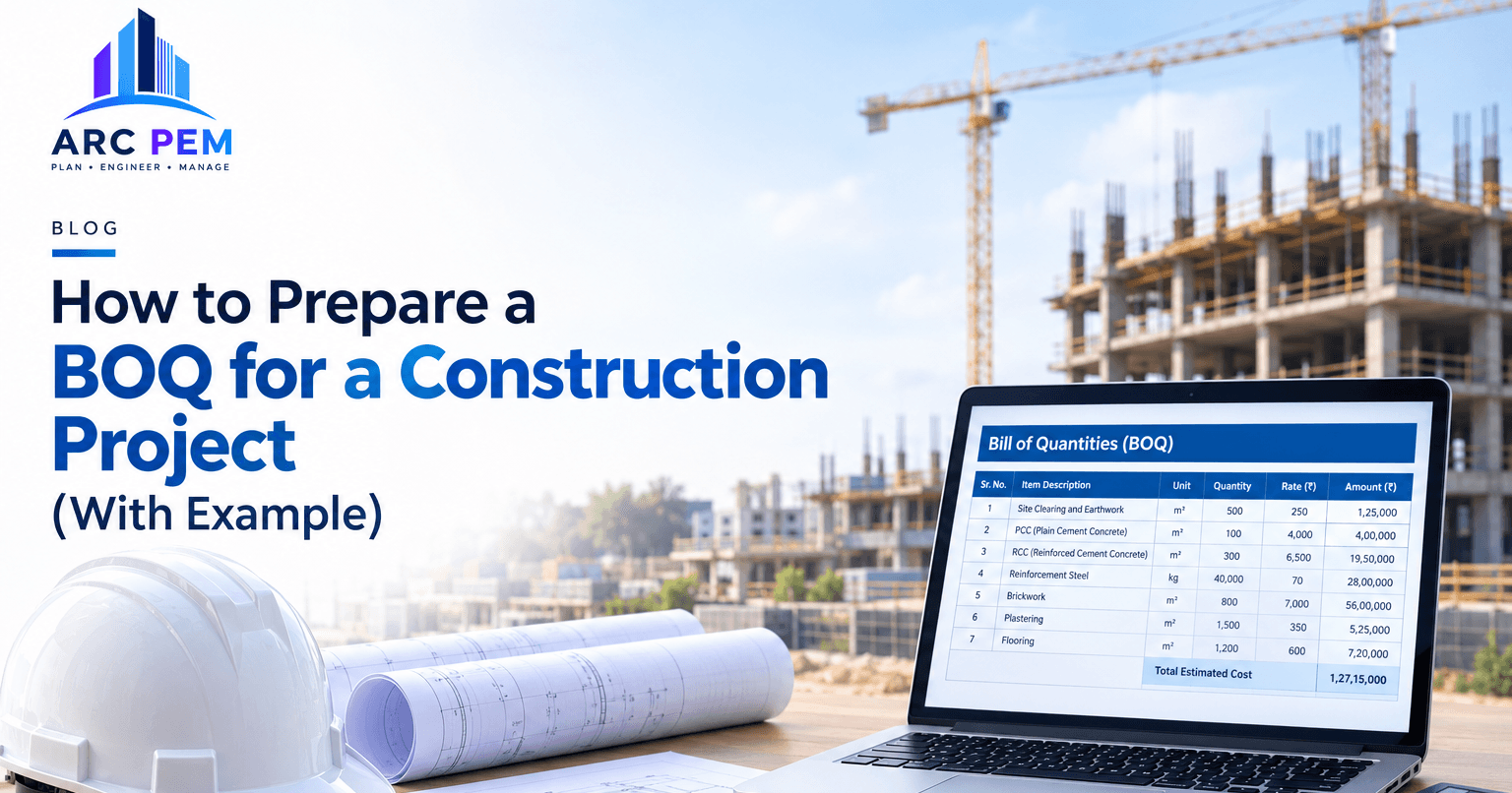
- Take the cost base from your BOQ. A priced BOQ, built as in our guide to preparing a BOQ, shows the construction cost without land.
- Put the cess in the project budget and the estimate, so it isn't a surprise. See the construction estimate template and our guide to construction cost per sq ft.
- Record the payment against the project as a statutory cost, with the challan, assessment and any engineer's certificate attached.
If the owner deducts the cess from your running bills as a contractor, show it as a separate deduction line. See our guides to the contractor bill format and retention money, advances and TDS.
BOCW Registration and the Cess Are Separate
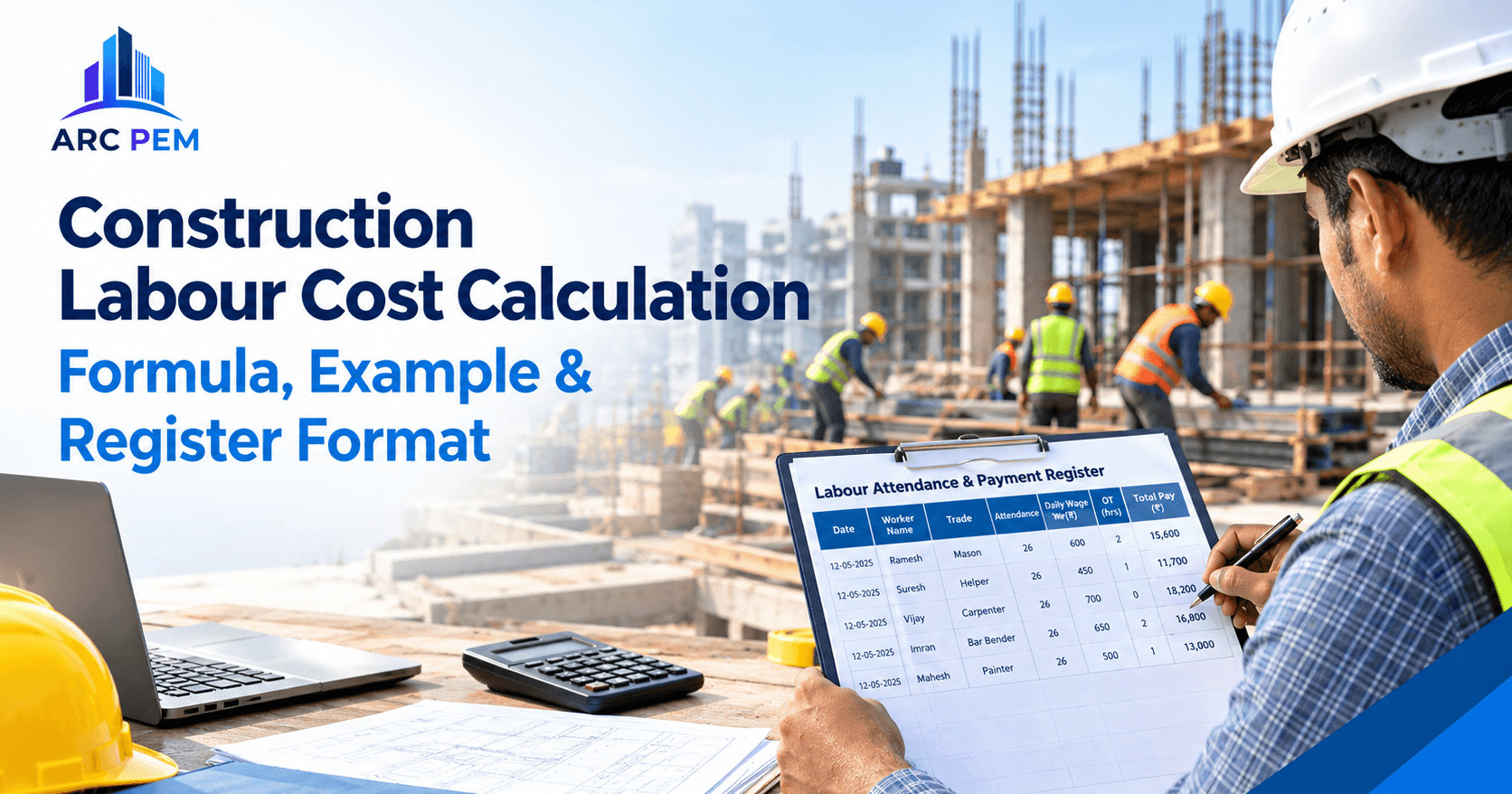
Registering your establishment and your workers is a different obligation from paying the cess. Reports on the new framework say establishment registration is handled under the Occupational Safety, Health and Working Conditions Code, while the cess is under the Social Security Code. Many state boards still run the registration and the collection process, so follow your board's current instructions and keep your registration certificate, worker registers and cess challans together. For the wage and attendance side, see our guide to construction labour cost calculation.
A Checklist for Builders and Contractors
- Find out who deposits the cess under your contract and your state's process.
- Work out the cost of construction from your BOQ, excluding land and compensation.
- Prepare the self-assessment and ask whether a chartered engineer's certificate is needed at your stage.
- Pay on time and keep the challan, because interest runs from the due date.
- Show the cess in the budget, and in the bill if the owner deducts it.
- Keep records of the assessment, certificate and payment with the project file.
- Check your state board for registration, forms and portals.
Common Mistakes
- Using old information. Many pages still describe the 1996 Cess Act. The reported framework is now the Social Security Code.
- Including land in the base.
- Not saying who pays in the contract. The deduction then becomes a dispute.
- Paying late. Interest runs month by month.
- Mixing up registration and the cess.
- Not recording the cess as a project cost.
- Assuming one state's process applies everywhere.
Keep Statutory Costs Visible
Cess, GST, TDS and retention are all deductions or costs that sit around the main contract value. If they live in separate files, they get missed. ARC PEM's expense and finance tracking keeps vendor, labour and GST records organised project by project, with contractor bills tracked against your BOQ. See how a project moves from BOQ to final bill, or view pricing.