Construction projects involve several expenses, including materials, labour, equipment, subcontractors and overheads. Even when a project starts with a detailed estimate, actual costs can change as work progresses.
Without a proper system to track these expenses, contractors and builders may struggle to identify cost overruns, manage payments and understand the actual profitability of a project.
This is where construction job costing becomes important.
Job costing helps construction businesses record expenses against individual projects, compare actual spending with estimated costs and make better financial decisions throughout the construction process.
In this guide, we will explain what construction job costing is, how to calculate it, which expenses to include, and how to use a practical example to track project costs. We will also cover how an Excel template or construction expense management software can simplify the process. If you want a ready-made starting point, you can download a free template from ARC PEM.
What Is Construction Job Costing?
Construction job costing is the process of identifying, recording and analysing the expenses associated with a particular construction project.
Instead of looking at the total expenses of a business as a whole, job costing assigns costs to individual projects, activities or work packages.
For example, a contractor managing three residential projects should be able to determine how much was spent on materials, labour, equipment and subcontractors for each project separately.
A typical construction job costing system tracks:
- Material purchases and consumption
- Labour wages and related expenses
- Equipment rentals and operating costs
- Subcontractor bills and payments
- Transportation and other site expenses
- Allocated overhead costs
This information helps contractors understand where money is being spent and whether a project is staying within its approved budget.
Job Costing vs. Construction Estimating
Construction estimating and job costing are closely related, but they serve different purposes.
Construction estimating determines how much a project is expected to cost before or during the planning stage. Job costing records and analyses what the project actually costs as work progresses.
| Basis | Construction Estimating | Construction Job Costing |
|---|---|---|
| Main purpose | Predict project costs | Track actual project expenses |
| Timing | Before work or during planning | Throughout project execution |
| Information used | Drawings, quantities, rates and assumptions | Bills, payments, labour records and actual expenses |
| Main outcome | Estimated project budget | Actual cost and cost variance |
| Key benefit | Better project planning | Better cost control |
For example, if the estimated material cost is ₹5,00,000 but actual material expenses reach ₹5,60,000, job costing helps identify the ₹60,000 difference and investigate its cause.
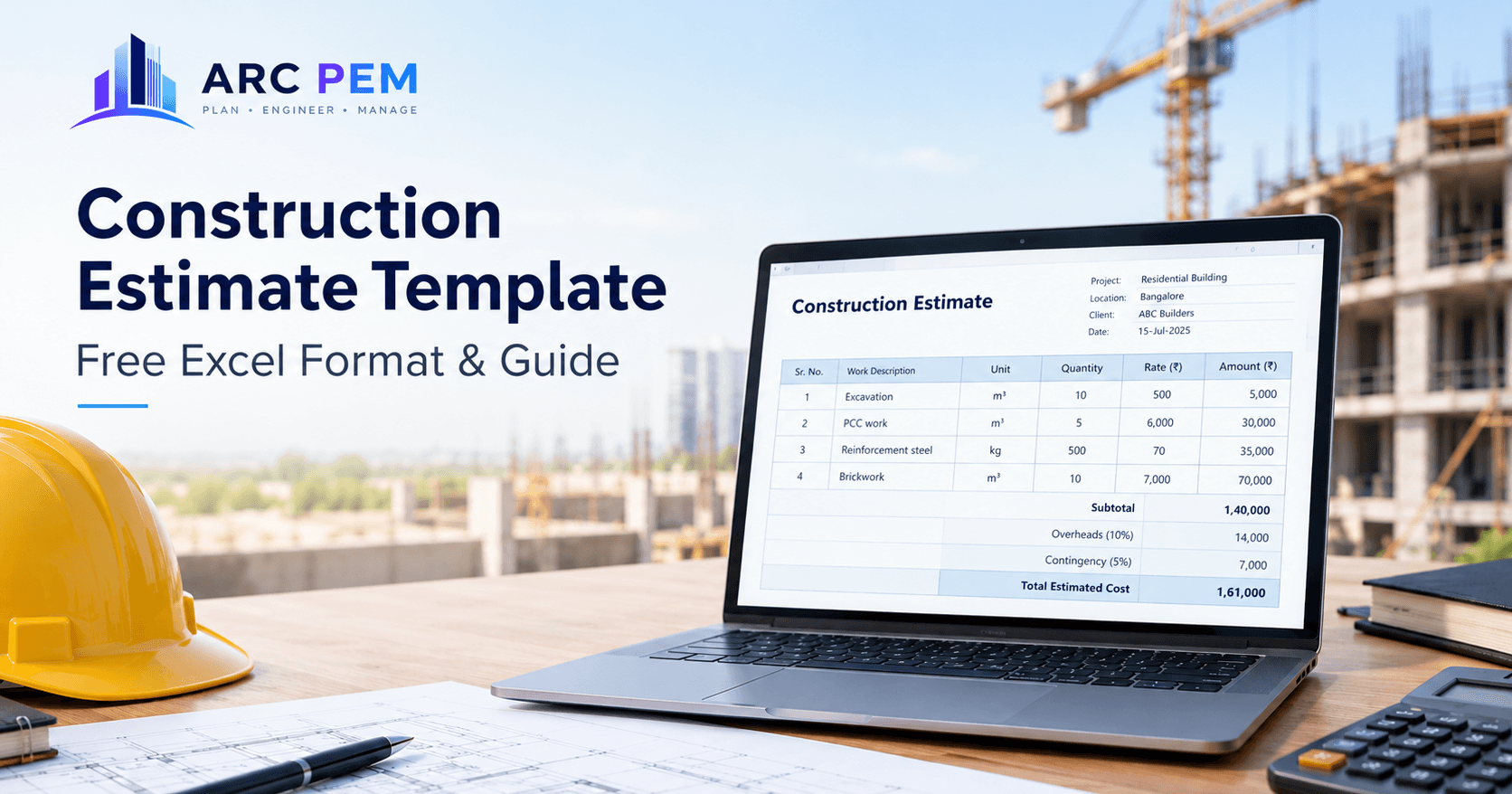
If you are preparing your project budget, start with our guide to the Construction Estimate Template. A well-prepared estimate gives you the baseline you need to compare against actual project expenses.
Why Is Job Costing Important in Construction?
Construction projects often run for months, and expenses arise at different stages. Tracking costs only at the end makes it harder to identify problems while there is still time to respond.
Here are the main benefits of job costing.
1. Better Budget Control
Job costing allows contractors to compare planned expenses with actual spending. When a cost category exceeds its budget, the project team can investigate the reason and take corrective action.
2. Improved Profitability Analysis
A project may generate substantial revenue but still deliver a low profit if expenses are not controlled. Job costing helps determine the actual cost of completing each project.
3. More Accurate Future Estimates
Historical cost data can help businesses prepare better estimates for future projects. Contractors can use previous material consumption, labour productivity and equipment expenses to improve their planning assumptions.
4. Better Cash Flow Visibility
Tracking bills, payments and outstanding amounts helps businesses understand their current financial commitments and plan upcoming payments more effectively.
5. Greater Accountability
Assigning expenses to individual projects and cost categories makes it easier to review spending and understand where overruns originate.
What Costs Should Be Included in Construction Job Costing?
A reliable job costing system should capture all relevant project expenses. These are generally divided into direct costs and indirect costs.
1. Material Costs
Material costs include the construction materials purchased or consumed for the project.
Examples include:
- Cement, sand and aggregates
- Steel and reinforcement bars
- Bricks and blocks
- Electrical and plumbing materials
- Paint, tiles and finishing materials
- Transportation and delivery charges attributable to the project
Record the material description, quantity, unit, rate, supplier, bill reference and project allocation wherever applicable. Material consumption above plan is a common source of overruns, so it is worth reading how to control steel wastage on site.
2. Labour Costs
Labour costs include payments for workers and other labour-related expenses attributable to the project.
Examples include:
- Mason and helper wages
- Carpenter and electrician wages
- Plumber and painter payments
- Skilled and unskilled labour
- Overtime and other applicable labour charges
For example, if 10 workers are paid ₹800 per day for 5 days, the labour cost is:
10 × ₹800 × 5 = ₹40,000
This calculation assumes all workers receive the same daily rate and work for the full five days.
3. Equipment Costs
Equipment expenses can include:
- Machinery and equipment rentals
- Fuel and operating expenses
- Repairs and maintenance
- Transportation of equipment
- Depreciation or other appropriate ownership costs
The costing method should be consistent with the business's accounting policy.
4. Subcontractor Costs
Many construction projects involve specialised contractors for electrical work, plumbing, waterproofing, painting and other activities.
Record the agreed contract amount, work completed, bills received, advances, payments and outstanding balances. Keep approved variations separate so changes in scope are not confused with the original contract. Remember that the amount a subcontractor actually receives is lower than the bill value, as explained in our guide to retention money, advances and TDS.
5. Overhead Costs
Overhead includes indirect business expenses that support project delivery but cannot always be traced to one activity directly.
Examples include office rent, administration, insurance, communication expenses and project management costs.
Businesses may allocate overhead using a consistent method, such as a percentage of direct costs or another suitable cost driver. Avoid counting the same expense twice.
How to Calculate Construction Job Costing
The basic formula for construction job costing is:
Total Job Cost = Direct Costs + Allocated Indirect Costs
Direct costs commonly include materials, labour, equipment and subcontractors. Indirect costs include the appropriate share of overheads.
A simplified formula is:
Total Job Cost = Material Cost + Labour Cost + Equipment Cost + Subcontractor Cost + Allocated Overheads
To calculate cost variance:
Cost Variance = Actual Cost − Estimated Cost
- A positive result means actual cost is higher than the estimate.
- A negative result means actual cost is lower than the estimate.
- Zero means actual and estimated costs are equal.
To calculate the cost overrun percentage:
Cost Overrun % = (Actual Cost − Estimated Cost) ÷ Estimated Cost × 100
These formulas assume the estimated and actual figures cover the same scope of work and cost categories.
If your team is already working with a BOQ, use its work items and estimated amounts as a starting point for project cost tracking. The BOQ and the job costing records should use consistent item descriptions and units wherever practical.
Construction Job Costing Example
Consider a hypothetical residential construction project. The following figures are illustrative and are provided only to demonstrate the calculation.
Estimated vs. Actual Project Costs
| Cost Category | Estimated Cost | Actual Cost |
|---|---|---|
| Materials | ₹5,00,000 | ₹5,30,000 |
| Labour | ₹2,00,000 | ₹1,90,000 |
| Equipment | ₹50,000 | ₹55,000 |
| Subcontractors | ₹1,50,000 | ₹1,60,000 |
| Allocated overheads | ₹50,000 | ₹55,000 |
| Total | ₹9,50,000 | ₹9,90,000 |
In this example, the estimated job cost was ₹9,50,000, while the actual cost was ₹9,90,000.
Cost Variance = ₹9,90,000 − ₹9,50,000 = ₹40,000
Cost Overrun % = ₹40,000 ÷ ₹9,50,000 × 100 = 4.21% approximately
The project has exceeded its estimated cost by approximately 4.21%.
What Does This Tell the Contractor?
The total figure identifies an overrun, but the category-level breakdown helps explain it.
- Material expenses exceeded the estimate by ₹30,000.
- Equipment costs increased by ₹5,000.
- Subcontractor costs increased by ₹10,000.
- Allocated overheads increased by ₹5,000.
- Labour expenses were ₹10,000 below the estimate.
The contractor can investigate material price changes, excess consumption, equipment rental periods and subcontractor variations to understand the reasons behind the difference.
This is the practical value of job costing: it turns a single project total into information that can guide decisions.
Important: This example compares costs, not profit. To calculate project profit, you also need the applicable project revenue and must account for the relevant adjustments.
How to Track Estimated vs. Actual Construction Costs
A job costing process is most useful when it is maintained throughout the project rather than reconstructed at the end.
Step 1: Create a Project Budget
Prepare an estimate using the project drawings, specifications, quantities and applicable rates. Divide the budget into clear categories such as materials, labour, equipment, subcontractors and overheads.
Step 2: Assign Expenses to the Correct Project
Every relevant bill, payment and expense record should identify the project it belongs to. Where necessary, use work-item or cost-category codes for more detailed reporting.
Step 3: Record Actual Expenses Regularly
Enter supplier bills, labour payments, equipment costs and subcontractor expenses promptly. Include dates, amounts, references and payment status so the records can be checked later.
Step 4: Track Outstanding and Committed Costs
A bill that has not been paid may still represent a project expense. Similarly, an approved purchase order or subcontract commitment may create a future financial obligation before the invoice arrives.
Keep incurred costs, paid amounts and future commitments distinct to avoid misleading reports or double counting.
Step 5: Compare Costs With the Budget
Review estimated and actual costs at regular intervals. Investigate significant differences before they become difficult to correct.
Step 6: Update Forecasts and Reports
Use current spending, outstanding bills, approved changes and remaining work to estimate the likely final project cost. Keep the original budget visible so changes do not hide the project's initial performance.
Common Construction Job Costing Mistakes
Even businesses that record expenses can struggle to calculate reliable project costs. Common mistakes include:
1. Recording Expenses Without Project Details
If bills are entered without identifying the project, it becomes difficult to determine the actual cost of each job.
Solution: Make project identification a standard part of expense recording.
2. Tracking Only Paid Bills
Looking only at payments can understate costs when bills have been received but remain unpaid.
Solution: Track incurred expenses and payment status separately, using consistent accounting treatment.
3. Ignoring Small Expenses
Transport, fuel, consumables and minor site purchases may seem insignificant individually, but together they can affect project profitability.
Solution: Establish a simple process for recording relevant site expenses and attaching supporting references.
4. Excluding Equipment and Overheads
Ignoring equipment usage or indirect expenses can make a project appear more profitable than it actually is.
Solution: Define which costs are included and apply a consistent allocation policy.
5. Failing to Review Cost Variances
A cost report has limited value if nobody investigates unusual differences.
Solution: Schedule regular reviews and assign responsibility for resolving significant variances.
6. Mixing Multiple Projects in One Ledger
Combining bills and payments across projects makes project-level analysis unreliable.
Solution: Keep project references consistent across bills, payments, labour records and cost reports.
How to Improve Construction Job Costing
Construction businesses can improve their costing process with a few practical habits.
- Use a detailed budget: Establish clear cost categories before work begins.
- Maintain consistent records: Use standard project names, expense categories and bill references.
- Review costs regularly: Compare actual expenses with the budget weekly or monthly, depending on project activity.
- Track changes: Record approved scope changes and their effect on the budget separately.
- Use historical data: Compare completed projects to improve future estimates.
- Reduce manual duplication: Avoid entering the same information into multiple disconnected spreadsheets when a suitable system can centralise the records.
For businesses managing several projects, keeping these records organised can become challenging. ARC PEM provides a construction-focused approach to managing project expenses and related financial records. See how a project moves from BOQ to final bill in ARC PEM, or explore expense and finance tracking.
Excel Template vs. Construction Expense Management Software
An Excel spreadsheet can be a practical starting point for a small project or a contractor who needs a simple cost summary. However, as the number of projects, bills and transactions increases, maintaining accurate records manually can require more effort.
| Feature | Excel Template | Construction Expense Management Software |
|---|---|---|
| Basic cost calculations | Suitable with formulas | Depends on the available features |
| Expense categorisation | Manual setup | May be built into the workflow |
| Multiple projects | Requires careful organisation | Can support project-wise records |
| Bill and payment tracking | Manual updates | Depends on available bill and payment features |
| Reports | Must be created or updated | May offer built-in reporting |
| Data consistency | Depends on user discipline | Can reduce repeated entry when workflows are configured well |
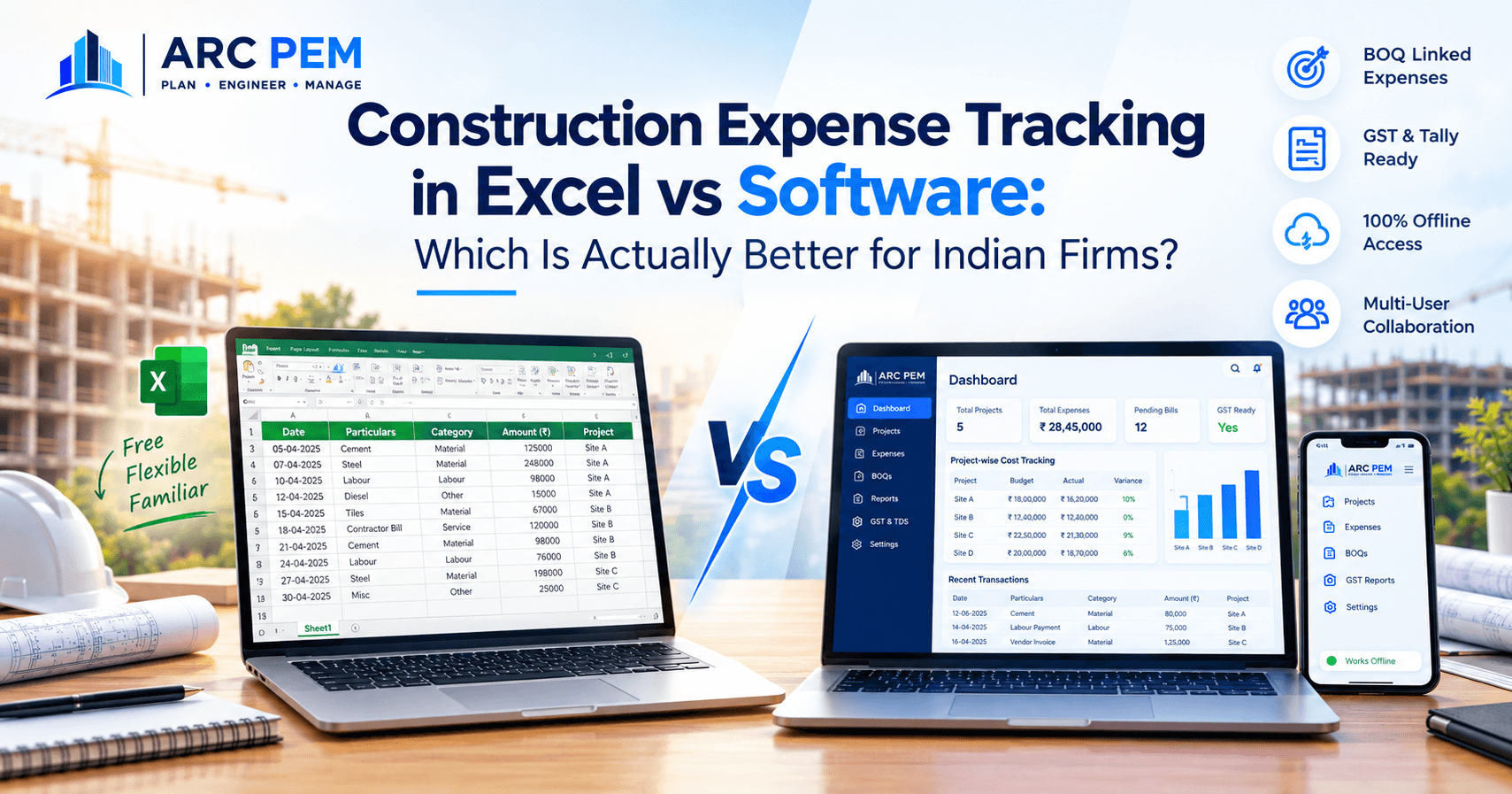
The right choice depends on project volume, reporting needs, team size and existing processes. For a fuller comparison, read our honest take on Excel vs software for construction expense tracking, or see how ARC PEM compares with Excel.
ARC PEM is designed for construction expense management, helping businesses organise project-related financial information. Visit the ARC PEM website to explore whether its features fit your workflow, or view pricing.
If you are still preparing the initial project budget, you can also refer to the Construction Estimate Template guide before setting up your job costing records.
Conclusion
Construction job costing helps contractors and builders move beyond the original estimate to understand what a project actually costs.
By tracking materials, labour, equipment, subcontractors and overheads, businesses can identify cost overruns earlier, improve future estimates and make more informed financial decisions.
Start with a clear project budget, maintain accurate expense records and review actual costs regularly. As your business grows, consider a workflow that makes project-wise expense tracking and reporting easier to maintain.
Want to organise your construction project expenses more effectively? Visit ARC PEM to learn more about construction expense management for your business.